
What Does It All Mean? by Thomas Nagel — a friendly first step into philosophy
If you are curious about big questions (mind, reality, right and wrong), this short book is a great place to start. It is clear, calm, and easy to follow—so you can build thinking skills and English at the same time. You can also track new words and short notes in Linguapress app while you read.
About the Book
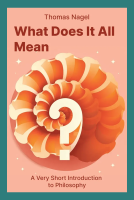 Title: What Does It All Mean? A Very Short Introduction to Philosophy
Author: Thomas Nagel
Genre: Philosophy / Education / Personal Growth
Year of Publication: 1987
Pages: 112
Summary: What the Book Is About
This book is a simple introduction to philosophy. It asks basic questions that many people think about, but do not always talk about. For example: How do we know anything is real? Do we have free will? Is the mind only the brain? What makes an action right or wrong? The author gives clear examples and explains different answers without heavy academic language. It feels like a thoughtful conversation that trains you to slow down, examine your beliefs, and accept uncertainty when there is no perfect proof. If you want a short book that stretches your thinking and your English reading skills, What Does It All Mean? by Thomas Nagel is a strong choice.
“What does it all mean?”
English Level
-
CEFR level: B2
-
Learners preparing for: IELTS 6.5 (or a comparable TOEFL level)
Why B2? The sentences are usually short and clean, but the ideas are abstract. You will meet words like evidence, argument, objective, subjective, and consciousness. A helpful method is to keep a “mini glossary” in Linguapress appand review it every few days.
Why this book is helpful for English learners
Philosophy books can be hard for learners, but this one is short and written to be understandable. It trains both language and thinking.
Language skills you will practice
-
Reading: you learn to follow an argument step by step (great for academic English in the U.S.).
-
Vocabulary: you build a strong set of “thinking words” used in essays and discussions.
-
Idioms and natural phrasing: you see common ways English explains ideas (for example: on the other hand, it follows that, suppose that).
-
Grammar in context: you get lots of clean examples of:
-
conditionals (if… then…)
-
contrast (however, although)
-
explanation structures (because, therefore)
-
Estimated unique words: ~4,000–6,000 (approximate)
3 smart ways to read it as an English learner
-
Read in short blocks, then re-tell the idea.
After 2–4 pages, stop and explain the point in simple English. This builds speaking and writing, not only reading. -
Turn each chapter into 3 questions.
Example: “What is the main question?” “What answers are possible?” “Which answer feels stronger, and why?”
This improves vocabulary and argument structure. -
Write one “belief sentence” and one “doubt sentence.”
-
Belief: “I think ___ because ___.”
-
Doubt: “But it might be wrong because ___.”
This trains realistic, academic-style English.
-
Vocabulary you can expect (high-value words)
Here are examples of the kinds of words you will meet. These are useful in U.S. schools and workplaces:
-
Thinking words: argument, assumption, evidence, conclusion, objection
-
Mind & reality: consciousness, perception, illusion, identity, experience
-
Ethics words: morality, responsibility, fairness, harm, intention
Table: common philosophy topics in the book + simple English tasks
| Topic | Simple meaning | English practice idea |
|---|---|---|
| Knowledge | How we know things | Write 3 sentences using “I know… / I believe… / I’m not sure…” |
| Reality | What is real vs. illusion | Make a pros/cons list for two viewpoints |
| Mind & body | Is the mind only the brain? | Learn 10 key words and use them in a short paragraph |
| Free will | Do we choose freely? | Record a 60-second opinion + one counter-argument |
| Right and wrong | How to judge actions | Write a short example story and discuss what is “right” |
User Reviews
⭐⭐⭐⭐⭐ “Very clear and surprisingly deep. It helped me think better, even when I did not agree with every idea.”
⭐⭐⭐⭐ “Short chapters, big questions. I liked how it explains different sides without pushing one answer.”
⭐⭐⭐⭐ “A good first philosophy book. Some topics are abstract, but the writing is simple enough to follow.”
Average Rating: 4.3 / 5
Did You Know?
- The book was written as a very short introduction for readers who are new to philosophy, so it stays brief and avoids technical jargon.
- Thomas Nagel is also known for famous philosophical work on consciousness and the question of what it is like to be another being.
- Because the chapters are short, many English learners use the book for a “one chapter per week” habit and keep vocabulary notes in Linguapress app.
Similar Books You Might Enjoy
If you liked the simple style and the big questions, these books can be a good next step:
-
Sophie’s World — Jostein Gaarder
-
The Problems of Philosophy — Bertrand Russell
-
Meditations — Marcus Aurelius
❓ FAQ
Is this book good if I have never read philosophy before?
Yes. It is written for beginners. It starts with very basic questions and builds slowly, without heavy academic terms.
Is it more about theory or practical life advice?
It is mostly theory and thinking skills. But it can improve your daily life by helping you reason, question assumptions, and communicate clearly.
How long does it take to read for an English learner?
Many learners finish it in 2–6 weeks, depending on level. A good pace is 10–20 minutes a day with short notes.
What should I do if the ideas feel too abstract?
Use examples. After each chapter, invent a real-life situation that matches the question. Then explain it in simple English.
Can this book help my speaking and writing, not only reading?
Yes—if you turn ideas into short outputs: summaries, opinions, and one counter-argument. Save your best sentences and review them weekly in Linguapress app.