
Zero to One by Blake Masters and Peter Thiel: A Simple Book About Big Startup Ideas
If you like tech, startups, and new ideas, this book is a strong choice. It is short, clear, and full of practical questions. It also has modern U.S. business vocabulary, so it works well for English learners who want to speak and write more confidently about innovation. Use Linguapress app to save key words and short phrases while you read.
About the Book
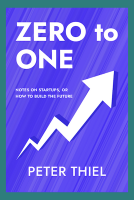 Title: Zero to One
Author: Peter Thiel and Blake Masters
Genre: Business / Innovation / Technology / Entrepreneurship / Productivity
Year of Publication: 2014
Pages: 200-220
What you will learn (quick list)
- Why copying competitors is not real innovation
- How startups can build something new
- Why “monopoly” can mean “a strong business” in this context
- How to think about secrets, competition, and differentiation
- How to test your idea with clear questions
Summary: What the Book Is About
The book explains the difference between doing something new and doing more of the same. “Zero to one” means creating something truly new—like a new product, a new way of doing business, or a new technology. The authors say that progress can come from big leaps, not only small improvements. They also argue that competition can push companies to copy each other, which can reduce creativity. Instead, they suggest building a unique business that has a clear advantage and can grow for many years. The book includes simple frameworks and questions that help readers think like founders.
Short quote: “Doing what we already know how to do takes the world from 1 to n; when you do something new, you go from 0 to 1.”
English Level
-
CEFR level: B2
-
Learners preparing for: IELTS 6.5 (or a comparable TOEFL score)
Why B2? The writing is readable, but it includes abstract ideas and business logic (for example: competition, monopoly, network effects, scale, distribution, marginal cost). B1 learners can still read it, but they will need more support and slower pacing.
Why this book is helpful for English learners
This book is useful for “modern professional English” in the U.S. You will see how people talk about startups, technology, and strategy. The chapters are short, so it’s easier to stay consistent and review vocabulary.
Skills you can improve
-
Reading: learn to follow an argument and spot the main claim
-
Vocabulary: build startup and strategy vocabulary used in U.S. workplaces
-
Idioms / set phrases: pick up short, memorable lines and contrasts
-
Grammar in context: practice:
-
strong opinions (X is wrong / Y is better)
-
comparisons (better than, instead of, rather than)
-
cause and effect (because, therefore, so, as a result)
-
conditional thinking (if… then…)
-
Useful vocabulary themes (list)
-
Innovation & tech: technology, breakthrough, invention, progress
-
Startup basics: founder, pitch, product-market fit, scaling
-
Strategy: advantage, differentiation, positioning, moat
-
Market thinking: competition, monopoly, market size, niche
-
Growth & sales: distribution, channel, customer acquisition, sales cycle
Estimated unique words
Estimated unique words: ~4,000–8,000 (approximate)
Tip: Create two word lists in Linguapress app:
-
“Startup nouns” (terms and concepts)
-
“Action verbs” (build, scale, launch, test, iterate, sell)
Table: Core concepts + simple English examples
| Concept in the book | Simple meaning | Example sentence you can reuse |
|---|---|---|
| Zero to one | Create something truly new | “We want to go from zero to one.” |
| Competition vs uniqueness | Copying is not innovation | “If we copy, we will look the same.” |
| Monopoly (in this context) | A business with strong advantage | “We need a strong advantage, not price wars.” |
| Secrets | Hidden truths others ignore | “A good business starts with a secret.” |
| Distribution | How you actually sell and deliver | “A great product still needs distribution.” |
User Reviews
⭐⭐⭐⭐⭐ “Short and sharp. It made me rethink competition and what ‘innovation’ really means. I finished it fast and highlighted many lines.”
⭐⭐⭐⭐ “Some ideas are bold, but the questions are very useful. It helped me structure my startup thinking and talk about strategy in simple words.”
⭐⭐⭐⭐ “Easy to read for a business book. Great for tech people and founders. I used the frameworks in meetings and product discussions.”
Average Rating: 4.5 / 5
Did You Know?
-
The book grew out of notes from a Stanford class on startups taught by Peter Thiel, and Blake Masters helped organize those ideas into a book format.
-
One of the book’s famous messages is that strong businesses often avoid direct competition by being unique in a clear niche.
-
The book became popular in startup circles because it uses short chapters and “big questions,” which makes it easy to discuss in teams.
Similar Books You Might Enjoy
If you want books that also focus on startups, strategy, and building something unique, try:
-
The Lean Startup — Eric Ries
-
The Hard Thing About Hard Things — Ben Horowitz
-
Start With Why — Simon Sinek
❓ FAQ
Is this book only for startup founders?
No. It’s useful for product managers, marketers, designers, and anyone who wants to understand how new ideas become real businesses.
Is the book practical or more theoretical?
It’s a mix. It does not give step-by-step instructions, but it gives strong mental models and questions you can apply to real projects.
What chapter is best for English learners to start with?
Start with the early chapters about “zero to one” and competition. They introduce the main vocabulary and the main message in simple form.
How can I study English with this book without feeling tired?
Read 5–7 pages per day. Write a 3-sentence summary. Save 8–10 useful words in Linguapress app, then review them the next day.
What is the key idea I should remember?
Real progress comes from creating something new, not only improving what already exists.