
Ultralearning by Scott H. Young — learn faster with Linguapress app
If you want to learn a hard skill quickly, this book feels like a friendly push in the right direction. It does not promise magic. Instead, it gives a clear method: pick a goal, design a plan, and practice in a way that actually changes your brain.
About the Book
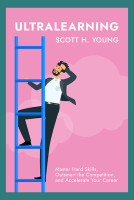 Title: Ultralearning: Master Hard Skills, Outsmart the Competition, and Accelerate Your Career
Author: Scott H. Young
Genre: Productivity / Personal Growth / Education
Year of Publication: 2019
Pages: 300
Summary: What the Book Is About
The book explains how people can learn difficult things faster by using a smart plan and strong practice. The author calls this approach “ultralearning.” It means you study with focus, test yourself often, and learn directly from real tasks. Instead of reading a lot and hoping it works, you choose the skill you want, break it into parts, and practice the parts that matter most. The book shares simple rules, real examples, and mistakes to avoid—so you can learn a language, coding, design, or any career skill with less wasted time.
“Master hard skills, outsmart the competition, and accelerate your career.”
English Level
-
CEFR level: B2
-
Learners preparing for: IELTS 6.5 (or a similar TOEFL score)
Why B2? The writing is clear, but it includes learning science vocabulary and longer explanations.
Why this book is helpful for English learners
Even though it is not an English textbook, it teaches “learning language” you will see in many U.S. books, courses, and workplaces. It also supports a strong reading habit—one of the best ways to grow your English naturally.
Skills it develops
-
Reading: structured nonfiction with examples and frameworks
-
Vocabulary: learning, productivity, career, and study terms
-
Idioms & natural phrases: common modern phrases used in U.S. nonfiction
-
Grammar in context: cause/effect, comparison, and clear “how-to” instructions
Estimated unique words: ~9,000–13,000 (approximate)
A practical idea: track your best “study phrases” and review them weekly in Linguapress app.
A simple “ultralearning” reading plan (easy and realistic)
Here are three ways to use this book to learn English while you learn the ideas:
-
Read with a “goal sentence.”
After each section, write one sentence: “This chapter teaches me to ___.”
This improves clarity and grammar in context. -
Use active recall (not re-reading).
Close the book and answer 3 questions from memory:-
What is the main idea?
-
What example did the author use?
-
What would I do this week?
-
-
Turn one idea into action.
Pick one principle and apply it for 7 days (small, not perfect).
You will learn vocabulary faster when you use it with a real plan.
Table: Ultralearning principles (and how to apply them to English)
| Principle (simple meaning) | What it looks like in the book | How you can use it for English |
|---|---|---|
| Focus | Remove distractions and go deep | 25 minutes reading + 5 minutes summary |
| Directness | Practice the real skill, not “almost” | Speak or write about real topics, not only exercises |
| Retrieval | Test yourself from memory | Explain a chapter without looking |
| Feedback | Get correction quickly | Ask someone to fix 5 sentences you wrote |
| Drill | Improve weak points | Repeat pronunciation of 10 hard words daily |
| Experimentation | Try different methods | Change your routine every 2 weeks if you feel stuck |
User Reviews
⭐⭐⭐⭐⭐ “It made me stop ‘collecting information’ and start practicing. The principles are simple, but they push you to do real work.”
⭐⭐⭐⭐ “Very practical and motivating. Some chapters feel intense, but I liked the clear steps and examples.”
⭐⭐⭐⭐ “Great for building a study system. I also picked up many useful nonfiction words and phrases while reading.”
Average Rating: 4.3 / 5
Did You Know?
-
Scott H. Young became widely known online for the “MIT Challenge,” a self-directed project to complete MIT’s computer science curriculum in about a year.
-
The book is built around nine core principles (like focus, feedback, and retrieval), which makes it easy to turn ideas into a study plan.
-
Many readers use the “ultralearning” idea not only for work skills, but also for language learning—because it focuses on practice, testing, and real tasks.
Similar Books You Might Enjoy
If you enjoyed the learning-and-improvement theme, try these:
-
Deep Work — Cal Newport
-
Make It Stick — Peter C. Brown, Henry L. Roediger III, Mark A. McDaniel
-
Peak — Anders Ericsson, Robert Pool
❓ FAQ
Is this book good for beginners in English?
If you are A2–B1, it may feel heavy. You can still use it with a slower pace: read shorter sections, use a dictionary, and focus on the main idea. B2 readers will feel more comfortable.
What does “ultralearning” mean in simple words?
It means learning fast by using intense, focused practice. You set a clear goal, practice the real skill, test yourself, and improve weak areas.
Do I need to study many hours a day to use these ideas?
No. The book supports intensity, but you can start small. Even 30–45 minutes a day works if you practice actively and track progress.
How can I use this book to improve speaking?
After each chapter, do a short speaking recap: 60–90 seconds. Use simple structure: main idea → example → what you will try. Record yourself once a week to see progress.
What’s one easy habit to start today?
Use retrieval. After reading, close the book and write (or say) a summary from memory. This improves both learning speed and English output.