
Thinkertoys by Michael Michalko
If you like practical creativity (not “wait for inspiration”), this book is a great fit. It gives you many simple tools to generate fresh ideas, even on busy days.
About the Book
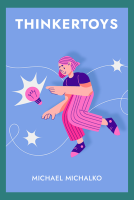 Title: Thinkertoys: A Handbook of Creative-Thinking Techniques
Author: Michael Michalko
Genre: Creativity, Innovation, Productivity
Year of Publication: 1991
Pages: 416
Summary: What the Book Is About
This book is like a toolbox for your brain. It shows many “thinking games” (the author calls them thinkertoys) that help you break old habits and create new solutions. Some tools push you to mix ideas, some help you ask better questions, and some help you look at a problem from a new angle. The style is practical: you read a method, try it, and write down your results.
“Each Thinkertoy is a specific technique for getting ideas to solve your challenges.”
English Level
-
CEFR level: B2
-
Learners preparing for: IELTS 6.0 (or similar level on TOEFL/other exams)
Why B2? The book uses business and creativity vocabulary, plus some longer explanations. If you are B1, you can still read it, but you may need extra time and a good dictionary.
Why This Book Helps English Learners
This is not only a creativity book. It is also good English practice because it is full of clear instructions, examples, and useful verbs for thinking and problem-solving.
Skills you can improve
-
Reading: you practice reading structured explanations and step-by-step methods
-
Vocabulary: you learn words for ideas, patterns, options, and decisions
-
Idioms & phrases: you meet common workplace phrases (and learn them in context)
-
Grammar in context: conditionals (“If… then…”), imperatives (“Try…”, “Write…”), and cause/effect language
Estimated number of unique words: ~10,000–14,000 (approx., depends on edition and how you count repeated terms)
Here are smart ways to study with it (and make progress faster), especially if you use the Linguapress app for spaced review:
-
Method 1: “Tool + mini journal”
-
Read one technique
-
Write 5–10 lines about a real problem you have
-
Highlight new verbs and collocations (e.g., generate ideas, challenge assumptions, break patterns)
-
-
Method 2: “One page, three questions”
-
After a page, answer:
-
What is the key idea?
-
What example did I understand best?
-
How can I use it today?
-
-
-
Method 3: “Vocabulary stack”
-
Collect only words you can reuse at work: framework, constraint, alternative, insight, refine, combine
-
Turn them into short sentences and review later
-
Quick table: what you learn while reading
| What you practice | What it looks like in the book | Simple example you can copy |
|---|---|---|
| Reading for structure | Methods, steps, and prompts | “Step 1… Step 2… Step 3…” |
| Vocabulary in action | Idea words + problem words | “Let’s reframe the problem.” |
| Idioms & work phrases | Common “thinking” language | “Think outside the box.” |
| Grammar in context | If-then logic, imperatives | “If we change X, then Y changes.” |
User Reviews
⭐⭐⭐⭐⭐ “The techniques are clear and easy to test. I used a few tools the same week and got better ideas in my team meetings.”
⭐⭐⭐⭐ “Some parts feel dense, but the methods are strong. If you do the exercises, you get real value.”
⭐⭐⭐⭐ “It’s like a creativity reference book. I don’t read it fast—I keep it on my desk and open it when I’m stuck.”
Average Rating: 4.0 / 5
Did You Know?
- The book is often described as a “handbook” because many readers don’t read it straight through—they use it as a tool library when they need ideas.
- The author’s main focus is applied creativity: techniques you can use in business, writing, teaching, and daily problem-solving—not only “artistic” creativity.
- Many exercises work well in groups, which is why the book is popular for workshops and team brainstorms.
Similar Books You Might Enjoy
If you liked the goal of this book—better ideas, clearer thinking, and practical tools—try these:
- A Whack on the Side of the Head — Roger von Oech
- Lateral Thinking — Edward de Bono
- Creative Confidence — Tom Kelley & David Kelley
❓ FAQ
Is this book better for entrepreneurs or for regular office jobs?
Both. The tools are general. Entrepreneurs use them for product ideas and messaging. Office teams use them for process improvements, planning, and problem-solving.
Can I read it even if I’m not a “creative person”?
Yes. The book is built for skill-building. You don’t need talent—you need repetition. Pick one technique per week and apply it to real problems.
What’s the best way to study it without getting overwhelmed?
Don’t try to do everything. Choose 5 techniques that match your needs (brainstorming, reframing, combining ideas, etc.). Use them again and again until they feel natural.
How can I use the book to improve speaking, not only reading?
After each technique, explain your idea out loud in 60 seconds: problem → method → solution. Record yourself once a week. This builds fluency and confidence.
Should I choose the newest edition or any edition is fine?
Any edition can be useful, but page count and examples may differ. If you want the most complete set of tools and updated sections, choose a later edition.
If you want a simple routine, you can pair one technique per week with the Linguapress app to review your best phrases and build a personal “idea vocabulary.”